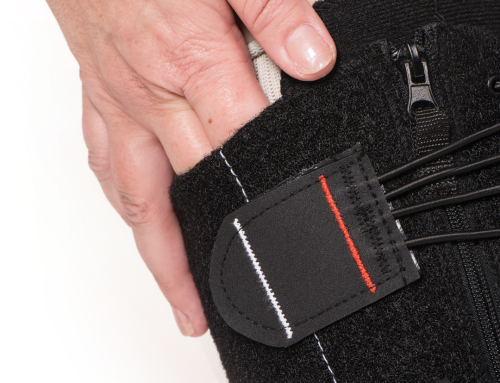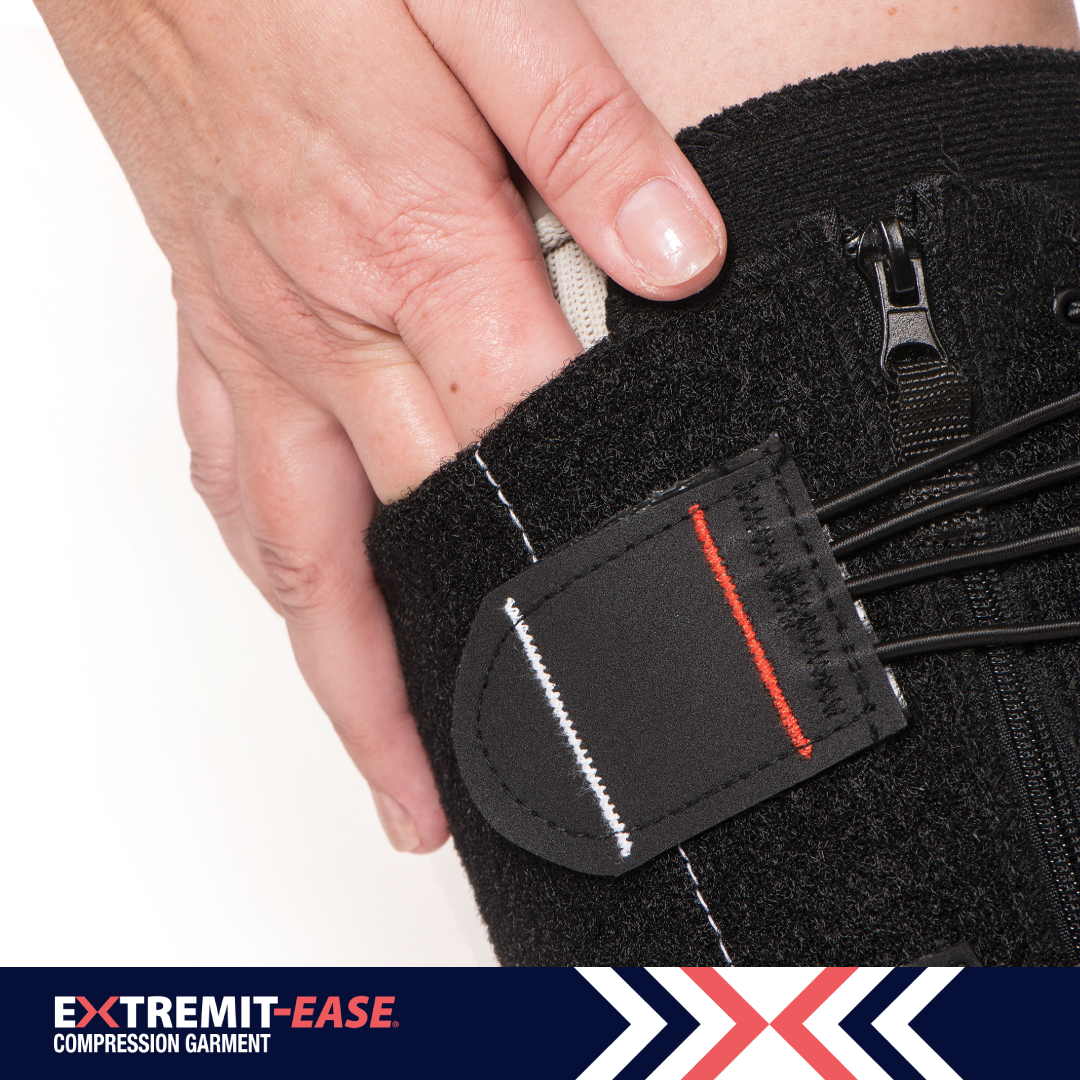
The EXTREMIT-EASE® Compression Garment from AMERX Health Care accomplishes compression with a much easier application for patients than more traditional options. Patients also appreciate the comfort of EXTREMIT-EASE and tolerate wearing it more than other compression options. Keep reading to find out why debridement is required with EXTREMIT-EASE.
Guidelines
EXTREMIT-EASE accomplishes gradient compression. It is considered a “surgical dressing,” and its coverage is outlined in the DMEMAC Surgical Dressings policy 1, 2. Coverage of EXTREMIT-EASE requires documentation of the medical necessity of compression and the presence of a qualifying wound. In describing a “qualifying wound,” the DMEMAC Surgical Dressings policy states coverage of surgical dressings requires:
- A wound caused by, or treated by, a surgical procedure
OR
- Debridement of the wound, regardless of the debridement technique.
Is Debridement Required With EXTREMIT-EASE?
Given the above guidelines, if there was no surgery, the wound needs to have been debrided for EXTREMIT-EASE coverage. The policy does not require that this debridement be performed at the same encounter in which the compression garment is dispensed. It places no timeline requirement on when the debridement needs to have been performed.
Coding
The PDAC-approved HCPCS code for EXTREMIT-EASE is A6545 (Gradient compression wrap, non-elastic below knee, 30-50 mm hg, each). When dispensed, this code should be listed on one line of the claim form with both an AW modifier and either an RT or LT modifier, whichever is appropriate for the extremity on which the garment will be used. If bilateral garments are dispensed, one unit of A6545 should be listed on two different claim lines with AW modifier appended to both, and RT modifier for one and LT modifier for the other.
-
Local Coverage Determination (LCD) Surgical Dressings L33831
https://www.cms.gov/medicare-coverage-database/details/lcd-details.aspx?LCDId=33831&ContrId=389