Estimated Read Time: 4 minutes, 37 seconds
Why is it so hard to put on a compression garment?
Because most compression garments were designed for therapy — not for the real human beings who have to wear them every day.
Traditional compression stockings and multilayer bandage systems require meaningful dexterity, grip strength, and flexibility. For patients managing lymphedema alongside arthritis, neuropathy, obesity, or simply the natural changes that come with aging — pulling a tight stocking over a swollen, heavy limb is not just inconvenient. It is genuinely impossible for many.
Even trained home care nurses applying standard bandages only achieved therapeutic compression levels 41–63% of the time. If the professionals struggle, patients don’t stand a chance.
And once the garment is finally on? Multilayer wraps trap heat, cause sweating, bunch, slide, and lose pressure within hours. When a patient is hot, itchy, and uncomfortable — the garment comes off. And it stays off.
I stopped wearing mine weeks ago. Am I the only one?
Not even close — only 1 in 3 patients stays compliant with traditional compression long term.
A 7-year cohort study of over 3,000 patients found that only 33% wore their garments consistently.
That is not a compliance problem — that is a design problem. When a therapy is this difficult to use and this uncomfortable to wear, patients don’t fail the therapy. The therapy fails the patients.
The consequences are felt every day. Without consistent compression, limb swelling returns, heaviness and fatigue worsen, skin begins to thicken and harden, and the aching discomfort that compression was controlling comes right back. For lymphedema patients, falling out of compliance is not a setback — it is a slow reversal of every gain.
Does compression actually make that much difference in how I feel?
Consistently worn compression is one of the most effective tools available for reducing the swelling, heaviness, fatigue, and pain that define life with lymphedema.
Compression works by applying graduated external pressure to the limb, mechanically moving accumulated fluid back into circulation and supporting the lymphatic system’s drainage function. The effects are both immediate and cumulative — patients report meaningful reductions in limb volume, decreased skin tightness, less end-of-day fatigue, and improved mobility when compression is worn consistently throughout the day. Long-term, sustained compression helps prevent the progressive skin and tissue changes — fibrosis, hardening, and increased infection risk — that make lymphedema harder to manage over time.
For patients who also have venous insufficiency or active ulceration, compression accelerates healing and reduces recurrence. But for the majority of lymphedema patients, the goal is simpler and just as important: feel better, move better, and keep the condition from progressing.
Is there a compression garment that’s actually easy to put on?
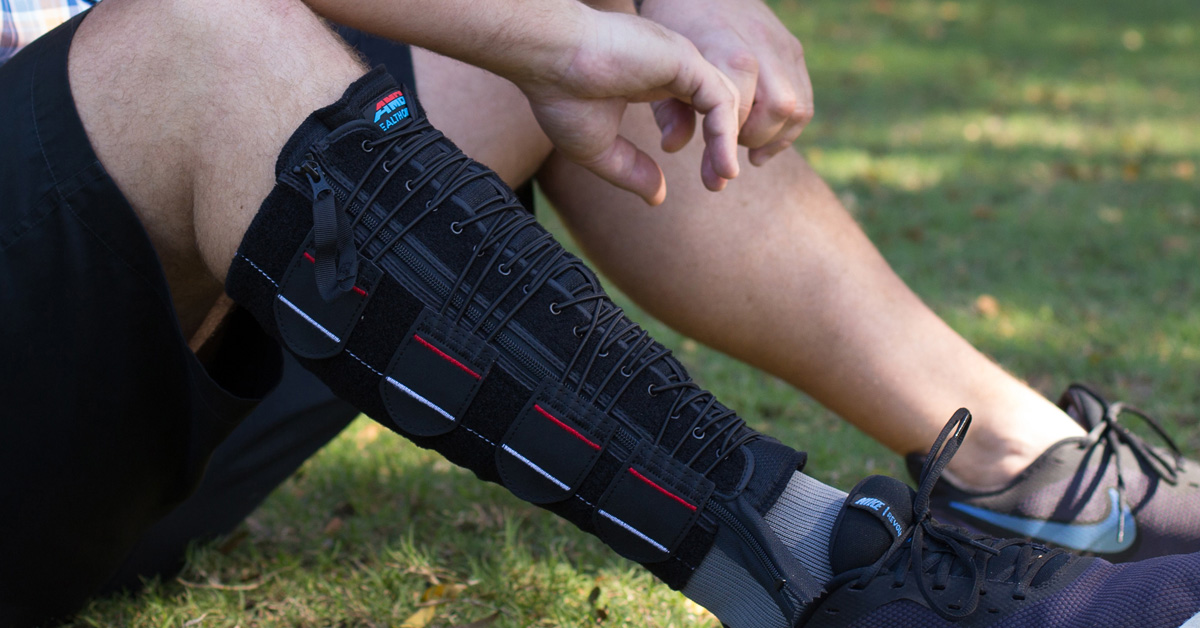
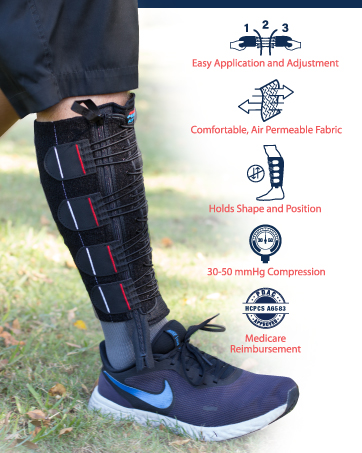
 Yes — the EXTREMIT-EASE® Compression Garment by AMERX Health Care was built specifically to solve the application problem that defeats every other garment on the market.
EXTREMIT-EASE is a Velcro-Bungee Garment (VBG) system. The patient opens the garment, positions the limb, zips, and adjusts the bungee closures with large easy-grip tabs. That’s the entire process. No rolling, pulling, or precise technique required. No professional needed. No risk of applying it at the wrong tension.
For patients who have struggled for years — or who quietly stopped trying — this is a genuine reset.
Does the research back this up — or is it just marketing?
The clinical data is real, and it was tested on the hardest possible population: patients who had already failed traditional compression therapy.
Lambert et al. studied previously non-compliant patients — people who had already given up on compression — after switching them to EXTREMIT-EASE. At one year:
- 61% of previously non-compliant patients were still wearing the garment
- Average daily wear time: 7 hours per day
- Ease of application rated 4 out of 5
- Comfort rated 6 out of 5
Only 17% returned to non-compliance. The system converted a majority of treatment failures into a year of sustained, therapeutic daily wear — and all the symptom relief that comes with it.
What about the heat and sweating? Every garment I’ve tried feels like a sauna.
 That’s not your imagination — and EXTREMIT-EASE was specifically tested on this.
An independent laboratory study using the ASTM Standard D737 tested air permeability across five leading compression garments. Air permeability measures how freely heat and moisture escape through the fabric — and it directly predicts how comfortable a garment feels after hours of wear.
- EXTREMIT-EASE®: 148.6 cfm
- FarrowWrap® by JOBST®: 48.27 cfm
- COMPREFLEX® by Sigvaris: 35.4 cfm
- circaid® by medi: 12.91 cfm
- JUZO®: 0.695 cfm
EXTREMIT-EASE allows three times more airflow than the nearest competitor and over 200 times more than the lowest performer. Cooler, drier, and more comfortable — worn longer because of it, and delivering the consistent daily compression that actually controls symptoms.
Summary: The Compression Garment Patients Will Actually Wear
EXTREMIT-EASE was designed around one simple idea: compression only controls lymphedema symptoms when patients wear it — and patients only wear it when it works for them, not against them.
- Easy On, Every Time: Zip-and-adjust Velcro-Bungee design enables independent application — even with limited dexterity, strength, or mobility
- Proven Compliance: 61% of previously non-compliant patients still wearing the garment at one year, averaging 10.7 hours daily
- Stays Comfortable: 6 cfm air permeability — more than three times the nearest competitor — keeps patients cool and committed all day
- Therapeutic Compression: 30–50 mmHg graduated compression, self-adjustable as limb volume changes throughout the day
- Real Symptom Relief: Consistent daily compression reduces swelling, heaviness, fatigue, pain, and the progressive skin changes that make lymphedema harder to manage over time
Author: Dr. Jonathan Moore, DPM, MS, PhD, AAPWCA
Co-Authors: Joshua Trujillo, Katelyn Norkowski
Clinical References:
Lambert Jr C., McLeod JM, Rodriguez CL, Smiley WL, Lambert C. Does the Use of Velcro-Bungee Compression Garment Improve Patient Experience and Compliance with Compression Therapy. SAWC Abstract. Spring 2018.
Raju S., Hollis K., Neglen P. Use of compression stockings in chronic venous disease: patient compliance and efficacy. NCBI. 2007.
Lehrman J., Italia M. Air Permeability Study Comparing the Thermo-Physiological Effects of Compression Garments Commonly Used for the Management of Lymphedema. 2018.
Zarchi K., Jemec GB. Delivery of compression therapy for venous leg ulcers. JAMA Dermatol. 2014; 150(7):730-6.
Mullins M., Bock K., Bhatia A. EXTREMIT-EASE® Compression Garment: a review and cases. Wound Central. Oct 2017 1(4).
O’Meara S., Cullum N., Nelson EA, Dumville JC. Compression for venous leg ulcers. Cochrane Database Syst Rev. 2012; 11:CD000265.
Mayberry JC, Moneta GL, Taylor LM Jr, Porter JM. Fifteen-year results of ambulatory compression therapy for chronic venous ulcers. Surgery. 1991; 109-575.
EXTREMIT-EASE® is a registered trademark of AMERX Health Care Corp. FarrowWrap® is a registered trademark of Farrow Medical Innovations, Inc. COMPREFLEX® is a registered trademark of SIGVARIS. circaid® is a registered trademark of CircAid Medical Products, Inc. JUZO® is a registered trademark of Julius Zorn & Co.