With federal investigators questioning some expensive wound treatments and new research highlighting collagen dressings, patients are asking a practical question: Could a local podiatrist help treat my wound?
A wound on your foot or leg that refuses to heal can quickly become frustrating. You may have been told to visit a hospital wound care center, or you may already be making regular trips for appointments and dressing changes without seeing the progress you hoped for. It’s understandable to wonder whether there may be another option.
Wound care has recently drawn national attention. Medicare reported that spending on advanced wound products known as skin substitutes rose from $256 million in 2019 to more than $10 billion in 2024. Federal investigators have also pursued cases involving alleged improper billing for some treatments. At the same time, research published in 2026 has reported encouraging findings involving collagen-based wound dressings.
These developments do not mean advanced wound treatments are inherently bad. Some can be important for difficult-to-heal wounds. They do, however, underscore the value of understanding why a treatment is being recommended—and whether care from a qualified podiatric wound care specialist may be appropriate.
Specialized Wound Care May Be Available Closer to Home
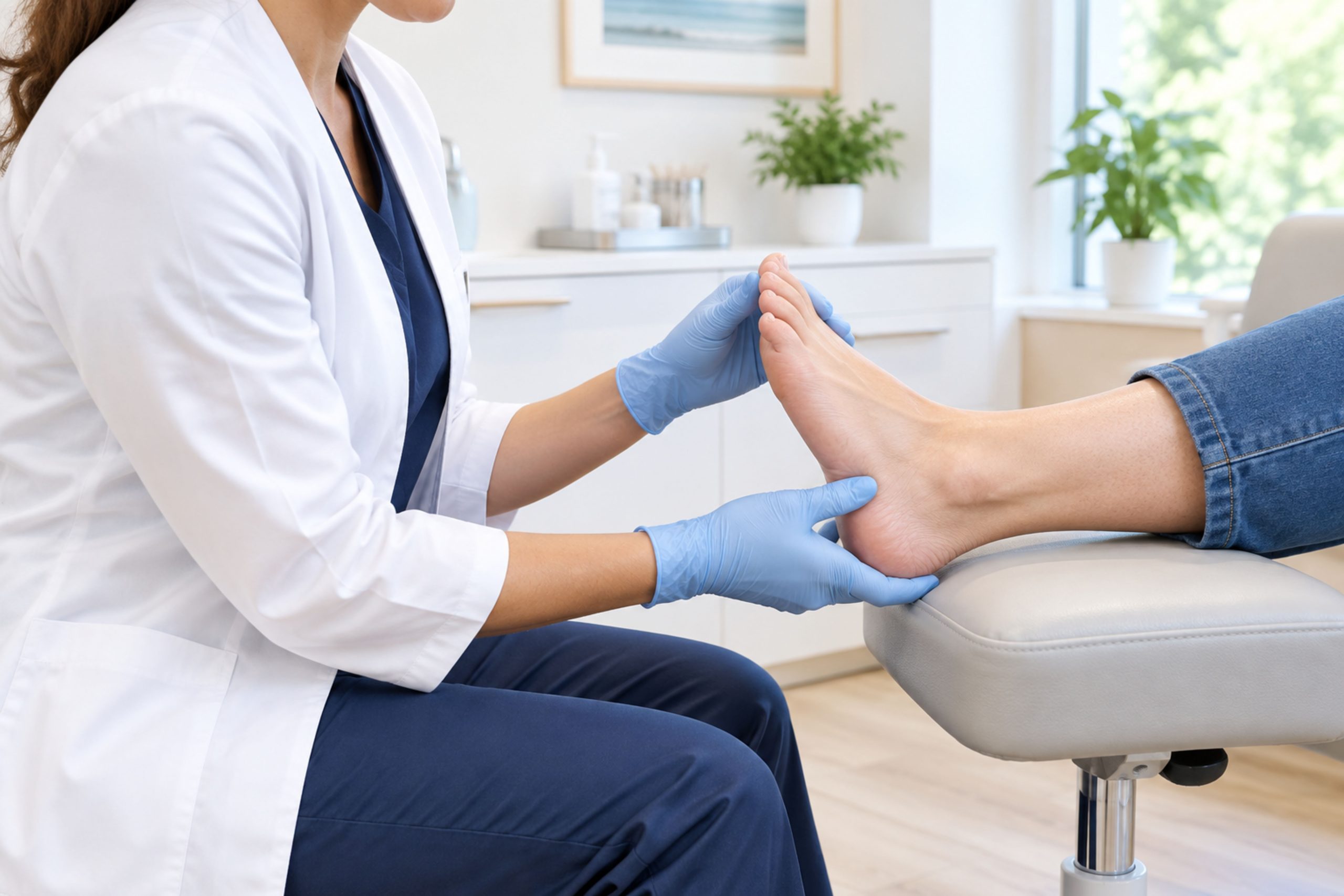 Many people are surprised to learn that podiatric physicians specialize in conditions affecting the feet and lower extremities, including many types of wounds. Diabetic foot ulcers, slow-healing wounds, and wounds associated with pressure or swelling are among the problems some podiatrists routinely manage.
Depending on the wound and the clinician’s services, office-based care may include evaluating factors that are slowing healing, removing unhealthy tissue when appropriate, managing infection, relieving pressure, and recommending specialized wound dressings. If your podiatrist already knows your medical history, treatment may also be easier to coordinate.
A hospital-based wound care center can provide important resources that may not be available in a private office. Some wounds require hospital-based treatment, vascular intervention, or care from multiple specialists. But having a wound does not automatically mean a hospital wound care center is the only appropriate option. The right setting depends on your wound, your overall health, and the care you need.
Healing Means Addressing More Than the Wound Itself
Choosing a dressing is only one part of wound care. A clinician may also need to identify what is preventing the wound from healing. Is pressure repeatedly affecting the area? Is circulation limited? Could infection, diabetes-related nerve damage, or swelling be contributing?
For example, a foot deformity may create excess pressure, while nerve damage can make an injury harder to notice. Poor circulation may limit blood flow, and swelling can interfere with the healing process. If underlying factors are not addressed, even an advanced dressing may not be enough on its own.
A podiatric wound care specialist can assess the wound and its contributing factors, then determine whether office-based treatment is appropriate or whether additional services are needed. Many podiatrists also have access to advanced wound care products, including collagen dressings and other specialized options.
The goal is not simply to cover the wound. It is to choose care that fits the wound and address the factors that may be keeping it from healing.
What Patients Should Know About Skin Substitutes
Skin substitutes are advanced products used for certain wounds that have not responded adequately to other treatments. When selected appropriately, they can be useful. However, the sharp increase in Medicare spending and investigations into alleged improper billing have raised questions about how some products have been used.
In 2026, Medicare changed reimbursement for many skin substitute products. These developments do not mean that every wound care center or treatment is inappropriate. They are a reminder that patients should feel comfortable asking why a particular treatment is recommended, what it is intended to do, and how progress will be evaluated.
If you have been referred to a wound care center for a foot or lower-leg wound, consider asking your primary care physician whether a qualified podiatric wound care specialist could be an appropriate option. Your care team can help determine which setting best fits your needs.
What Does Collagen Have to Do with Wound Healing?
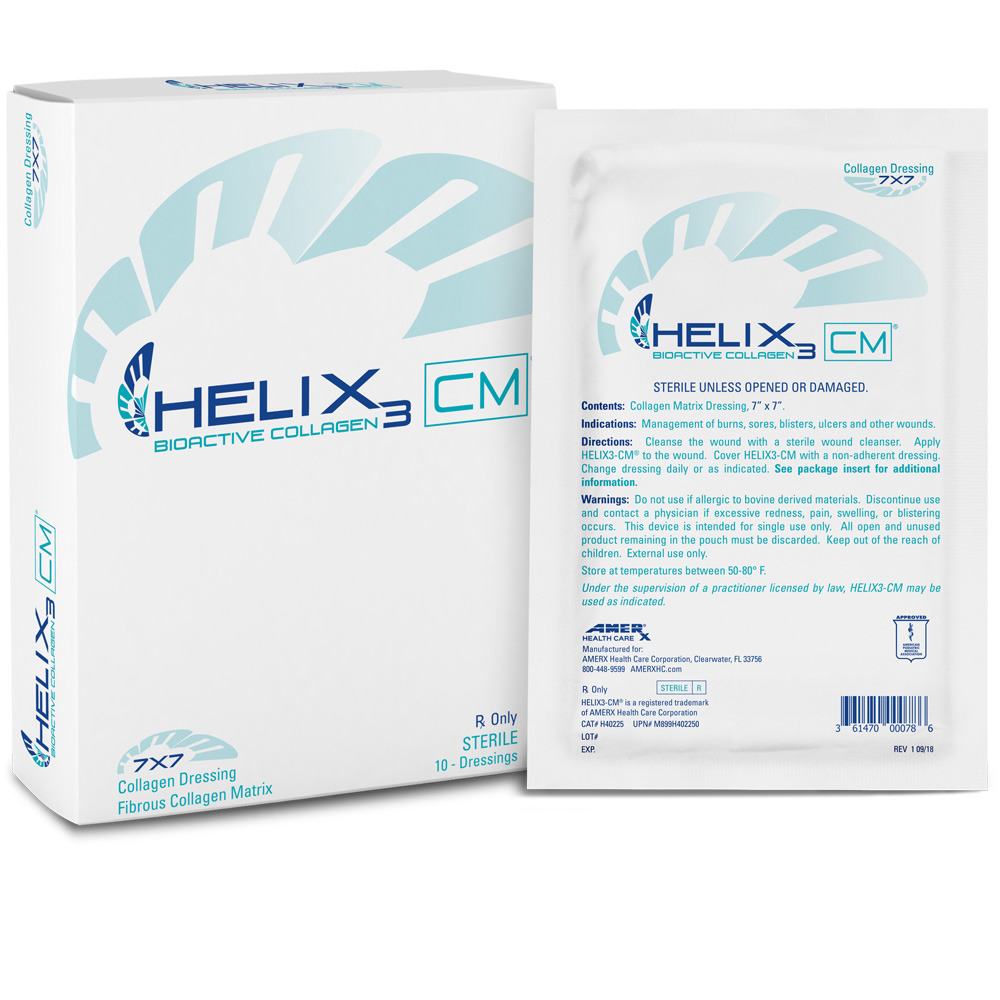 Collagen is a protein involved in the body’s healing process. It helps provide a framework that supports the rebuilding of damaged tissue. A systematic review published in 2026 examined 22 studies involving collagen-based dressings for diabetic foot ulcers and reported promising findings related to wound size reduction, healing time, and wound closure.
One collagen-based option a podiatrist may consider for an appropriate wound is HELIX3® Bioactive Collagen from AMERX Health Care. HELIX3 uses non-hydrolyzed collagen that preserves its natural triple-helix structure. Collagen dressings are designed to support the wound environment as the body works to repair damaged tissue.
Not every wound needs the same product, and collagen is not right for every situation. Ask your wound care professional whether a collagen dressing may be appropriate for your specific wound.
The Right Dressing Can Change as a Wound Changes
If you have been using the same dressing for weeks, it is reasonable to ask whether your wound is progressing and whether the treatment plan still fits its needs. Wounds do not all heal at the same rate, and different wounds can require different approaches.
Some wounds may need additional moisture, while others produce excess drainage. Some require pressure relief or attention to circulation, infection, or swelling.
The dressing that is appropriate now may not be the best choice several weeks later.
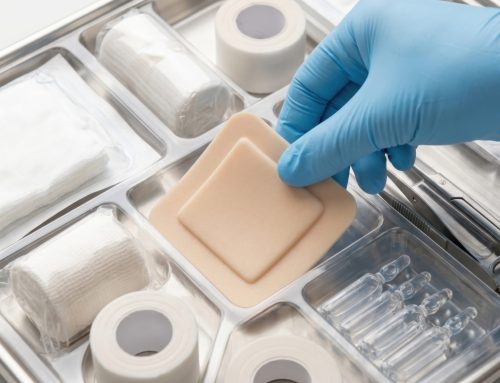
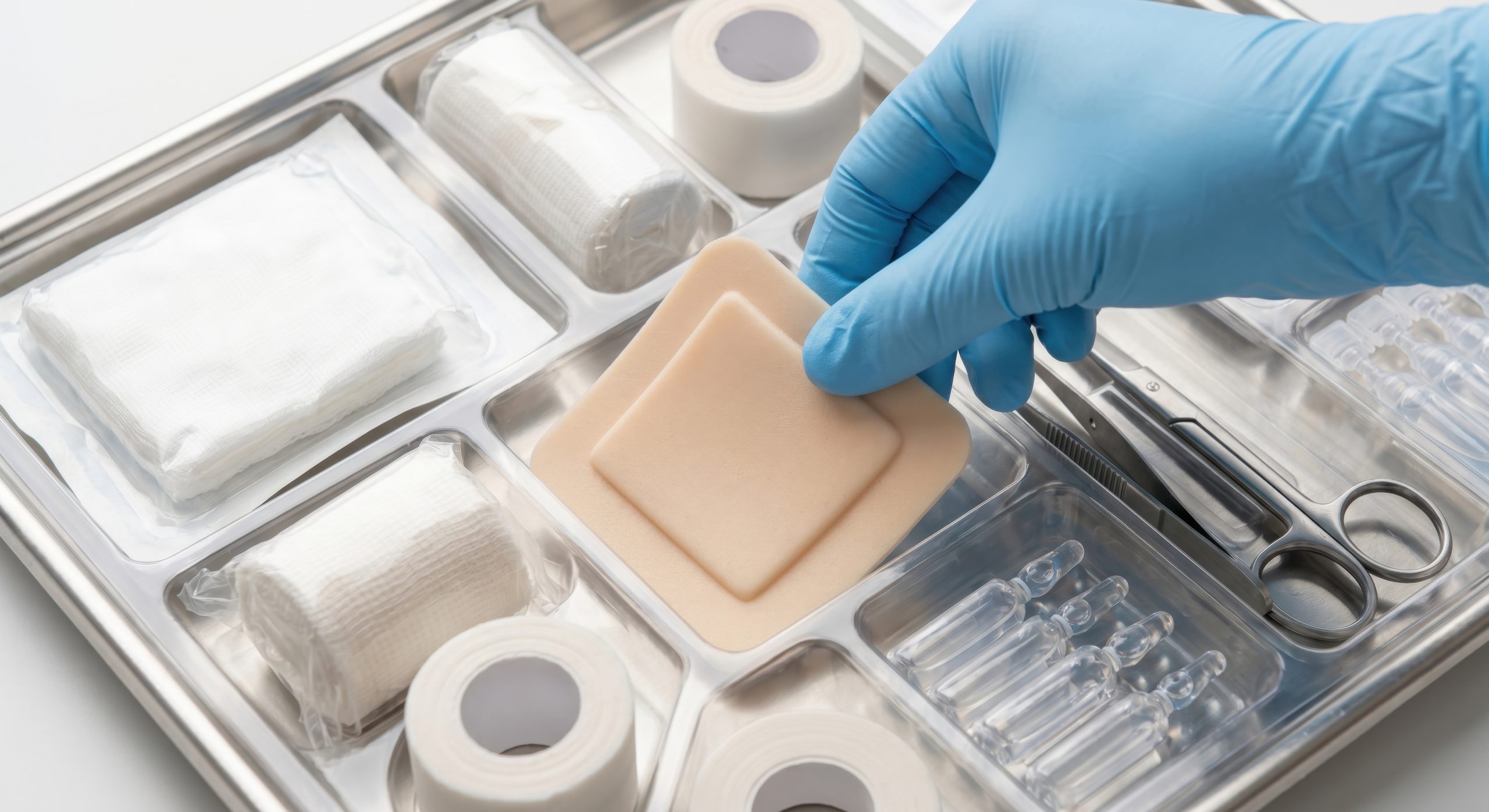
AMERX offers wound care options for use as recommended by a healthcare professional, including AMERIGEL® Hydrogel Wound Dressing, which helps maintain a moist wound environment for appropriate wounds, and HELIX3® Bioactive Collagen. AMERX also offers specialized wound care supplies and wound care kits.
Your podiatric physician can evaluate your wound and determine which products are suitable. The goal is not to switch dressings without a reason, but to match the treatment to the wound at the right time.
Continuing Wound Care at Home
 Professional evaluations and certain procedures remain essential, but many patients can perform prescribed dressing changes at home between appointments. Having access to the recommended supplies can make that part of care more convenient.
Through AMERX Patient Direct, prescribed wound care products can be made available through a podiatrist’s office or delivered directly to a patient’s home. This can help reduce the need to search multiple pharmacies or medical supply stores for the products recommended by the care team. AMERX also offers wound care kits intended to make prescribed home dressing changes more convenient.
Home dressing changes do not replace professional follow-up. Keep appointments as recommended, and contact your healthcare professional if you have concerns about your wound or its progress.
How Can You Tell Whether a Treatment is Working?
One important question to ask at follow-up visits is: Is my wound getting smaller?
A wound that is healing should generally show measurable progress over time. Your podiatrist can monitor factors such as its size, depth, drainage, and the condition of the surrounding tissue.
If the wound is not improving, the treatment plan may need to be reassessed. Pressure, circulation problems, infection, swelling, or the need for a different treatment approach may be contributing. You deserve to understand what is happening with your wound and how your healthcare professional is evaluating its progress.
Experience and Access Matter
 Founded in 1993, AMERX Health Care has provided wound care products to podiatric physicians and wound care professionals for more than 30 years. Its product line includes HELIX3 Bioactive Collagen, AMERIGEL Hydrogel Wound Dressing, and wound care kits designed to support treatment in clinical settings and at home.
With AMERX Patient Direct, prescribed supplies can also be delivered to patients’ homes. Your healthcare professional can help determine which products are appropriate and how to obtain them as part of your treatment plan.
Ask About the Care That Fits Your Wound
Sometimes a hospital-based wound care center is the right choice, particularly when a wound requires advanced procedures or coordinated care from multiple specialists. For many patients with foot and lower-extremity wounds, however, a qualified podiatric physician may be able to provide specialized care in an office setting.
If your primary care physician has recommended a wound care center, consider asking: “Could a qualified podiatric wound care specialist treat this wound?” Your care team can help you understand your options and decide what is appropriate for your situation.
You can also ask whether products such as HELIX3® Bioactive Collagen or AMERIGEL® Hydrogel Wound Dressing may be suitable for your wound, and how prescribed supplies can be obtained for home care.
Don’t just ask what is being put on your wound. Ask what may be keeping it from healing—and how your care team will measure progress.
Learn more at amerxhc.com.
Important: This article is intended for educational purposes only. Serious infections, rapidly worsening wounds, and circulation problems may require urgent medical attention or treatment from multiple specialists.
References
Centers for Medicare & Medicaid Services. “CMS Modernizes Payment Accuracy and Significantly Cuts Spending Waste.” 2025. Medicare skin substitute spending and 2026 payment reforms.
U.S. Department of Justice. “United States Obtains $2.6M Settlement with Heuser Health as Part of Broader ‘Skin Scam’ Fraud-Fighting Initiative.” September 2, 2026.
Rahimi S, et al. “Collagen-based dressings for diabetic foot ulcers: A systematic review.” Caspian Journal of Internal Medicine. 2026;17(2):278–301.
AMERX Health Care. HELIX3 Bioactive Collagen, AMERIGEL Hydrogel, Patient Direct, and company information. amerxhc.com.
Author: Dr. Jonathan Moore, DPM, MS, PhD, AAPWCA
Co-Authors: Joshua Trujillo, Katelyn Norkowski